
Thursday, February 9, 2012


Thursday, February 2, 2012
"The Rotifera of the Scottish Lochs"
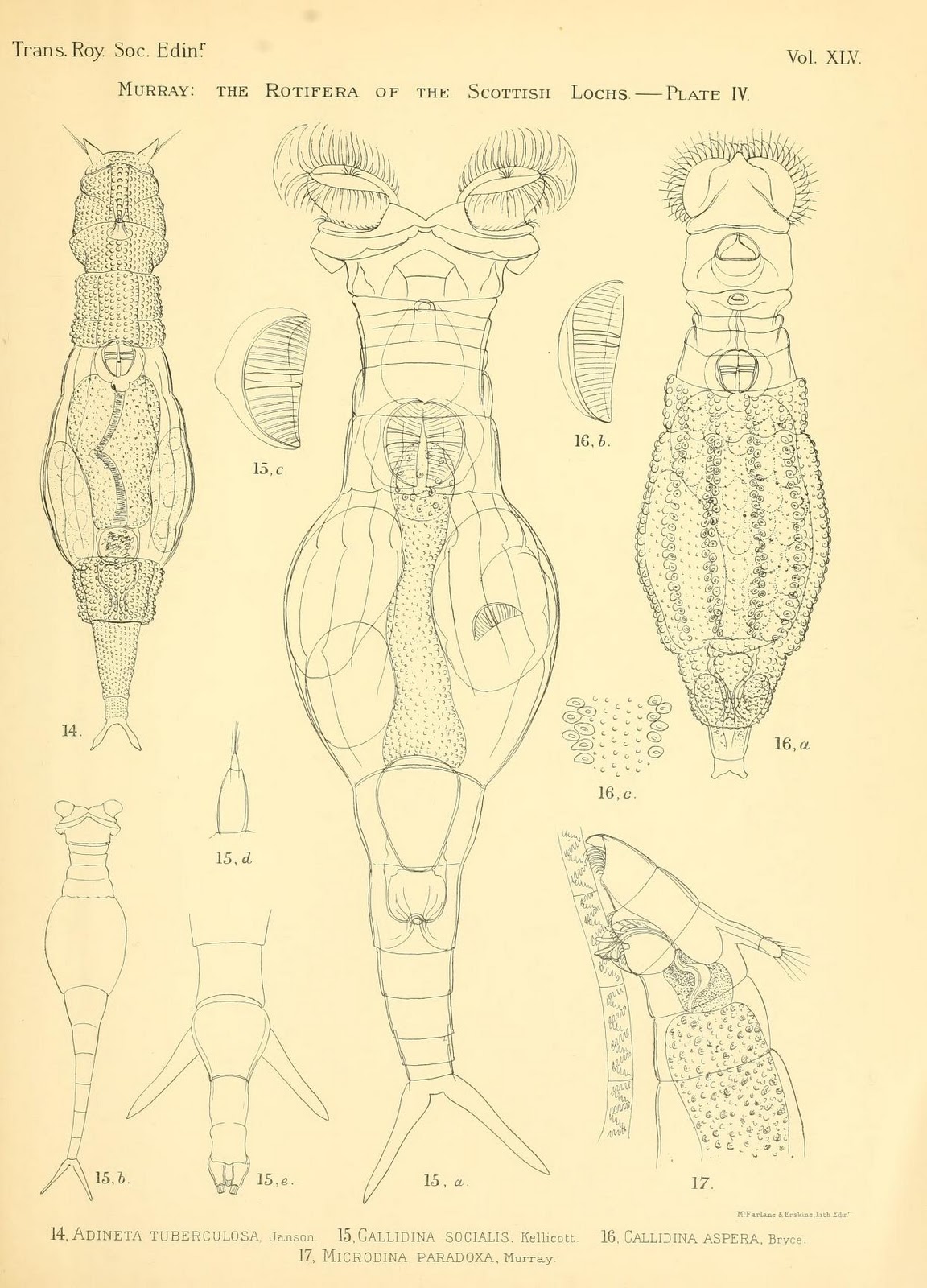
Thursday, January 26, 2012
Sand, magnified

Friday, January 20, 2012
Siphusauctum
Over a century after its initial discovery, the Burgess Shale continues to be a treasure trove of bizarre Cambrian fossils, most recently this tulip-shaped creature:
 |
| Reconstruction by Marianne Collins |
“Most interesting is that this feeding system appears to be unique among animals. Recent advances have linked many bizarre Burgess Shale animals as primitive members of many animal groups that are found today, but Siphusauctum defies this trend. We do not know where it fits in relation to other organisms,” said lead author O’Brien.Via Life Before the Dinosaurs.
Tuesday, January 17, 2012
Fossils from Darwin's cabinet

A "treasure trove" of fossils - including some collected by Charles Darwin - has been re-discovered in an old cabinet.From BBC News. The Daily Mail has more pictures.
The fossils, lost for some 165 years, were found by chance in the vaults of the British Geological Survey HQ near Keyworth, UK.
...
The find was made by the palaeontologist Dr Howard Falcon-Lang.
Dr Falcon-Lang, who is based in the department of earth sciences at Royal Holloway, University of London, spotted some drawers in a cabinet marked "unregistered fossil plants".
"Inside the drawer were hundreds of beautiful glass slides made by polishing fossil plants into thin translucent sheets," Dr Falcon-Lang explained.
"This process allows them to be studied under the microscope. Almost the first slide I picked up was labelled 'C. Darwin Esq'."
Subscribe to:
Posts (Atom)