 |
| Floating seaweed |
 |
| Garibaldi fish glimpsed through the waves |

 |
| Merganser |
 |
| Harbor seal |
 |
| Green anemone |
 |
| The ages of Western Gull From back to front: juvenile, second year, adult |
 |
| Crab shell |
 |
| Lined shore crab |


 |
| Gull shaking a paper bag |
 |
| Until it acquired its prey... a scone! |
 |
| Egret with a big Sculpin |
 |
| "Hey, can I have some of that?" |
 |
| A chase, which I didn't see how it resolved, over the tidal rocks |
 |
| Grebes afloat like fuzzy boats |
 |
| Darn, dropped it... |


 |
| How do I eat this thing? |

 |
| Aaaaaaaahhhhhhh |
 |
| Note the featureless pale "underside" of the body |
 |
| And the two eyes on the "top side" |

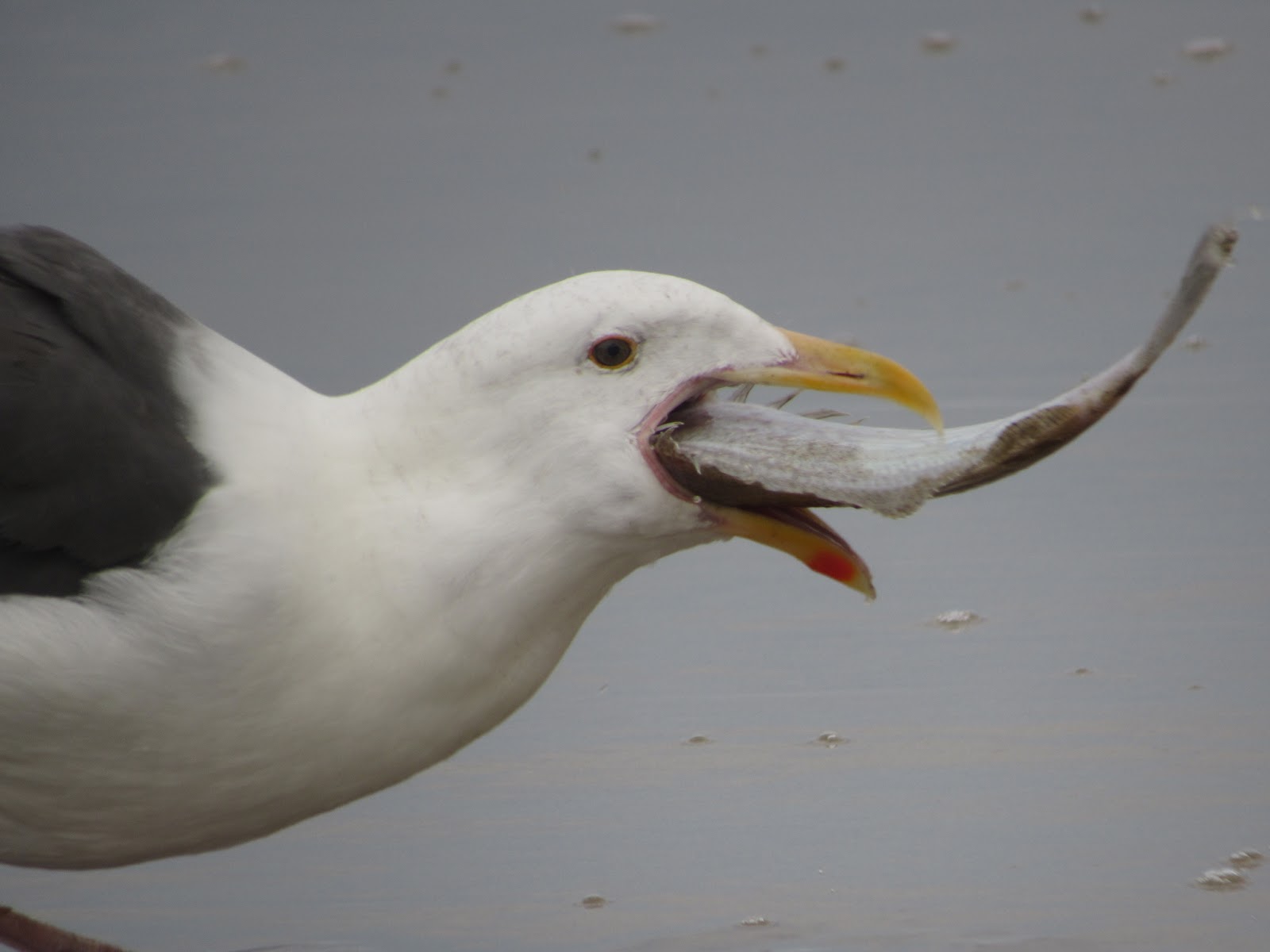 |
| Going... |
 |
| Going.... |
 |
| Not quite... |
 |
| Almost... |
 |
| Gone! |


From Boston.com's 50 best photos from the natural world.Seahorses are displayed at an endangered species exhibition at London Zoo. ( Dan Kitwood/Getty Images)
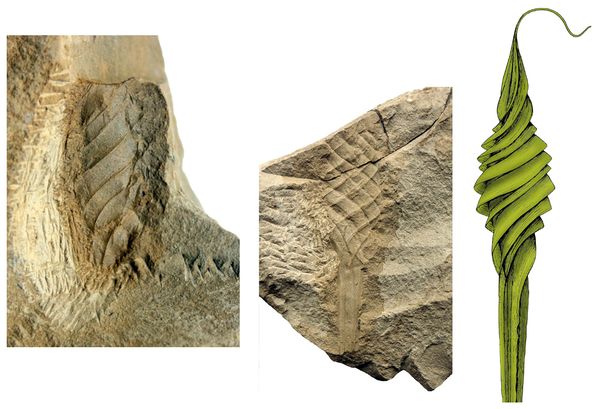
Several 230-million-year-old teeth and egg capsules uncovered at a fossil site in southwestern Kyrgyzstan suggest hundreds of young sharks once congregated in a shallow lake, a new study says.Image (showing a beautiful fossil egg case) and information from National Geographic.
Called hybodontids, the animals were likely bottom feeders, like modern-day nurse sharks.
Mothers would've attached their eggs to horsetails and other marshy plants along the lakeshore. Once born, the Triassic-era babies would've had their pick from a rich food supply of tiny invertebrates, while dense vegetation offered protection from predators.


